To be honest, I’ve witnessed far too many individuals accuse their extensions of slipping, lifting or causing damage to their hair – when the true perpetrator was standing in front of them the entire time the tape was in place.
The majority of people spend hours looking for the ideal set of extensions—the right brand, the right length, and the right color and then, without giving it any thought, either order a random roll from Amazon or use the cheap tape that comes with the box. A few weeks later they’re dealing with extensions that slide out mid conversation or leave sticky residue that takes a full weekend to remove.
The tape you choose determines everything. How long your extensions last, how natural they feel, whether your scalp gets irritated, and whether your natural hair comes out the other side of a removal session looking healthy or wrecked.
This guide is going to help you find exactly the right tape for your hair type, lifestyle and extension brand — no fluff, no guesswork. We’ll also go over whether tape in hair extensions are truly detrimental to your hair,
How much do they cost?
How to properly care for them and whether they’re worth it if you have thin hair. Everything you need, all in one place.
What Is Tape for Tape In Extensions — And Why Does It Matter?
If you’re new to tape in extensions – here’s a quick rundown of how the whole system works.
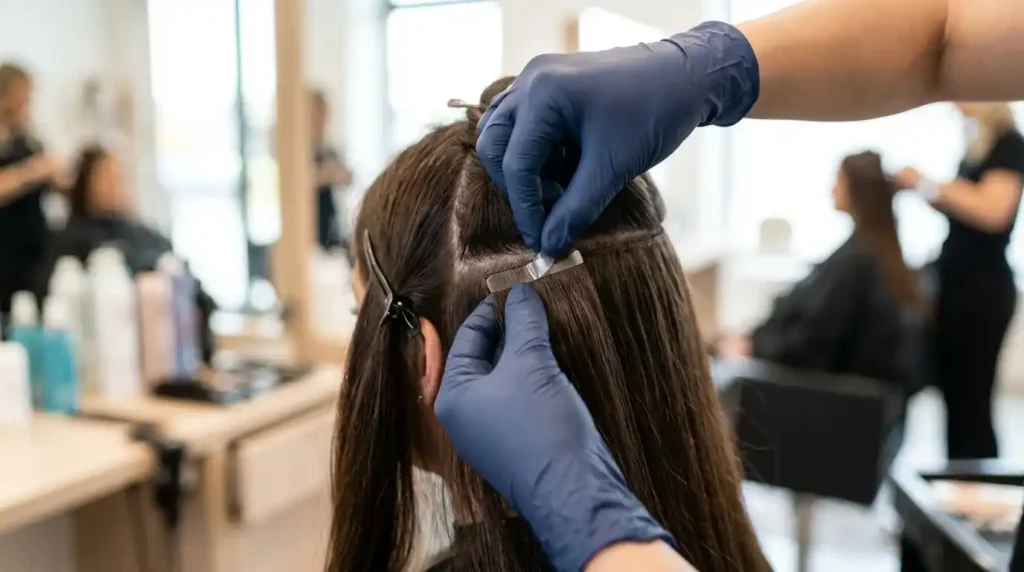
Tape in extensions use small wefts of hair — usually about 1.5 to 4 inches wide. Each attached to a thin strip of adhesive at the top. Two wefts sandwich a thin section of your natural hair between them and the adhesive bonds them together close to the root. When it’s done right, the result is completely flat against your head, invisible under your hair, and comfortable to wear for weeks.
The tape itself is typically a double-sided, polyurethane-based adhesive. The good stuff is medical-grade — strong enough to hold through washing, sweating, and styling, but gentle enough that it won’t rip out your hair when it’s time for removal.
Here’s something most people don’t realize: the tape that comes pre-applied on brand-new extensions is usually decent quality, but it’s one-use only. Once you remove your extensions for a move-up appointment (which happens around every 6 to 8 weeks), you need to replace the tape entirely. That’s where replacement tape tabs come in — and that’s what this guide is really about.
Think of it this way: the hair wefts themselves can be reused multiple times. It’s the tape that wears out. If you choose inexpensive tape – you may need to reapply much sooner than you would want.
Types of Hair Extension Tape: Which One Do You Actually Need?
Walk into the tape section on Amazon and it looks overwhelming. Tabs, rolls, single-sided, double-sided, hypoallergenic — here’s what all of it actually means.
Double-Sided Tape Tabs
This is the standard. Two wefts go on either side of a thin section of your natural hair, with a double-sided adhesive tab on each weft. They stick to each other and lock your hair in between. This is the format you’ll use for the vast majority of tape-in installations.
Good options to look at: GOO GOO Hair Extension Tape Double Sided Adhesive Replacement Tape (72pcs) and MIILYE Hair Extension Tape 100 Tabs Double Sided Adhesive Replacement Tape — both are consistently well-reviewed on Amazon and hold up for 6 weeks or more.
Single-Sided Tape Tabs
Instead of sandwiching your natural hair between two wefts, you use just one weft with a single sided tab. This creates a lighter bond – which is exactly what you want if your hair is on the finer or thinner side. Less weight means less tension on your roots.
The GOO GOO Hair Extension Tape also comes in configurations compatible with single-sided use, and Big Kizzy Extra Hold Single-Sided Tape Tabs are specifically designed for this.
Tape Rolls
Rather than pre-cut tabs, tape rolls let you cut your own size. Stylists tend to prefer these because they can customize the dimensions to fit different extension brands and weft sizes perfectly. If you’re doing professional installations, this format gives you more control.
Walker Tape Ultra Hold Roll is one of the most trusted names in this category and is available on Amazon — widely used in salons worldwide.
Hypoallergenic Tape
If your scalp is sensitive, reactive or prone to irritation – standard polyurethane adhesives can sometimes cause problems. Hypoallergenic tapes are latex free and formulated with gentler adhesives that still hold well but won’t trigger a reaction for most people.
Glam Seamless Double Sided Tape for Hair Extensions (60 Tabs Pack) is a popular hypoallergenic-friendly option available on Amazon and works well for sensitive scalp types.
Keratin-Infused Tape
Some tapes incorporate a keratin coating that mimics the texture of natural hair. It helping the bond feel more seamless and sit flatter against the scalp. These are particularly popular in professional salon environments for their durability and easy application.
How to Pick the Right Tape for Your Hair and Life
There’s no one size fits all answer here. The right tape depends on a handful of factors:
Your hair thickness: If your hair is thick or coarse, you need a high-tack tape with a strong bond — something like the GOO GOO Double Sided Replacement Tape or the MIILYE 100 Tab Pack. Fine or fragile hair needs something gentler — look for softer adhesive options or go single-sided.
Your lifestyle: Active lifestyle, gym four times a week, hair that gets sweaty? You need a tape formulated for sweat and oil resistance. A regular hold tape will start lifting on you within two or three weeks if you’re not careful about this.
Your extension brand: This is something a lot of people get wrong. Some tapes are specifically engineered to work with particular extension brands because the weft backing material affects how the adhesive bonds. We’ll cover brand compatibility in detail in a later section.
How long you need it to last: Regular hold tapes typically last 5 to 6 weeks before you notice lifting. Extra hold formulas stretch that out to 7 or even 8 weeks. If you want maximum wear time between appointments, go for an extra-hold tab.
Your budget: Replacement tape tabs generally run between $8 and $30 on Amazon depending on the pack size and brand. Spending a little more on quality tape upfront almost always saves money in the long run — you won’t need to reapply as often.
The Best Tape for Tape In Hair Extensions: Our Top Picks
These are the products worth your money. I’ve organized them by use case so you can find your match quickly.
1. GOO GOO Hair Extension Tape Double Sided Adhesive Replacement Tape (72pcs)
Best for: Most hair types, everyday use Hold time: 6+ weeks
This is one of the bestselling tape products on Amazon for a reason. The GOO GOO tabs are clean, strong, and leave almost no residue on removal. They measure 1.6 x 0.3 inches — a standard size that works with most extension brands. The adhesive activates well with a flat iron and holds reliably through washing and styling.
What I like most about these is the consistency. You’re not going to get tabs that stick great some days and not others. If you prep your hair properly — clean, dry, oil-free at the roots — these tabs do exactly what they’re supposed to.
Pros: Widely compatible, reliable hold, minimal residue, great value
Cons: May not be strong enough for very thick or oily hair
2. MIILYE Hair Extension Tape 100 Tabs Double Sided Adhesive Replacement Tape
Best for: Value buyers, frequent retapers Hold time: 6+ weeks
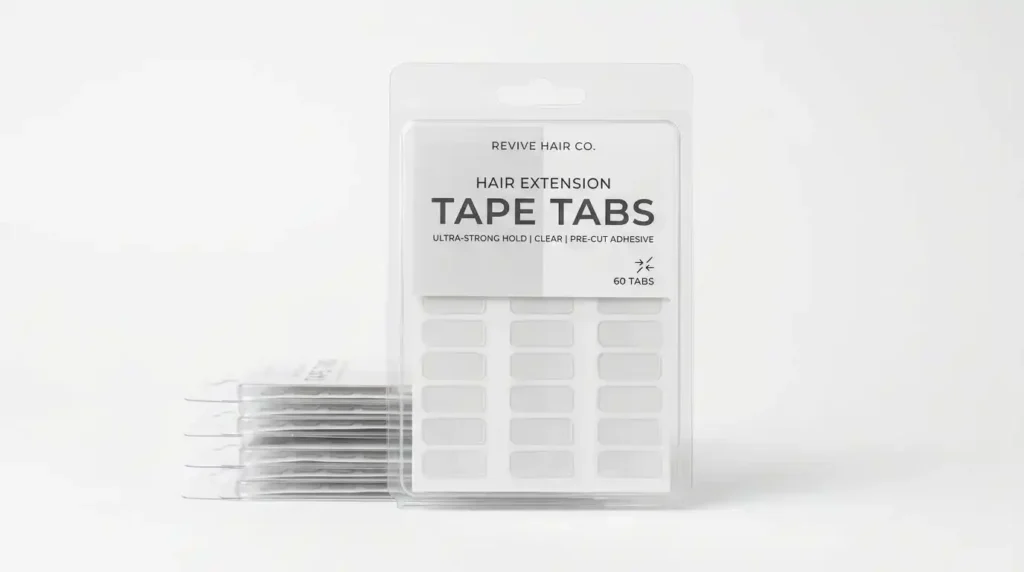
If you’re going through tabs quickly — whether because you have a full head of extensions or because you’re a stylist doing multiple clients — the MIILYE 100-tab pack is excellent value. The adhesive is no-residue formula, which makes removal and cleanup noticeably easier.
These tabs are slightly easier to peel apart than some other brands – which is a small but genuinely useful feature when you’re working through a full set. The spaced release gap design is a thoughtful detail that prevents tabs from sticking to themselves before you’re ready.
The hold is consistently cited in reviews as lasting the full 6-week window with proper care. Pair with the MIILYE Tape In Extension Remover Spray (4oz) at removal time for a clean, damage-free process.
Pros: Great value, no-residue formula, easy to peel, good volume per pack
Cons: Newer brand with a shorter track record than some competitors
3. Walker Tape Ultra Hold (Roll Format)
Best for: Salon professionals, oily scalps, thick hair Hold time: Up to 8 weeks
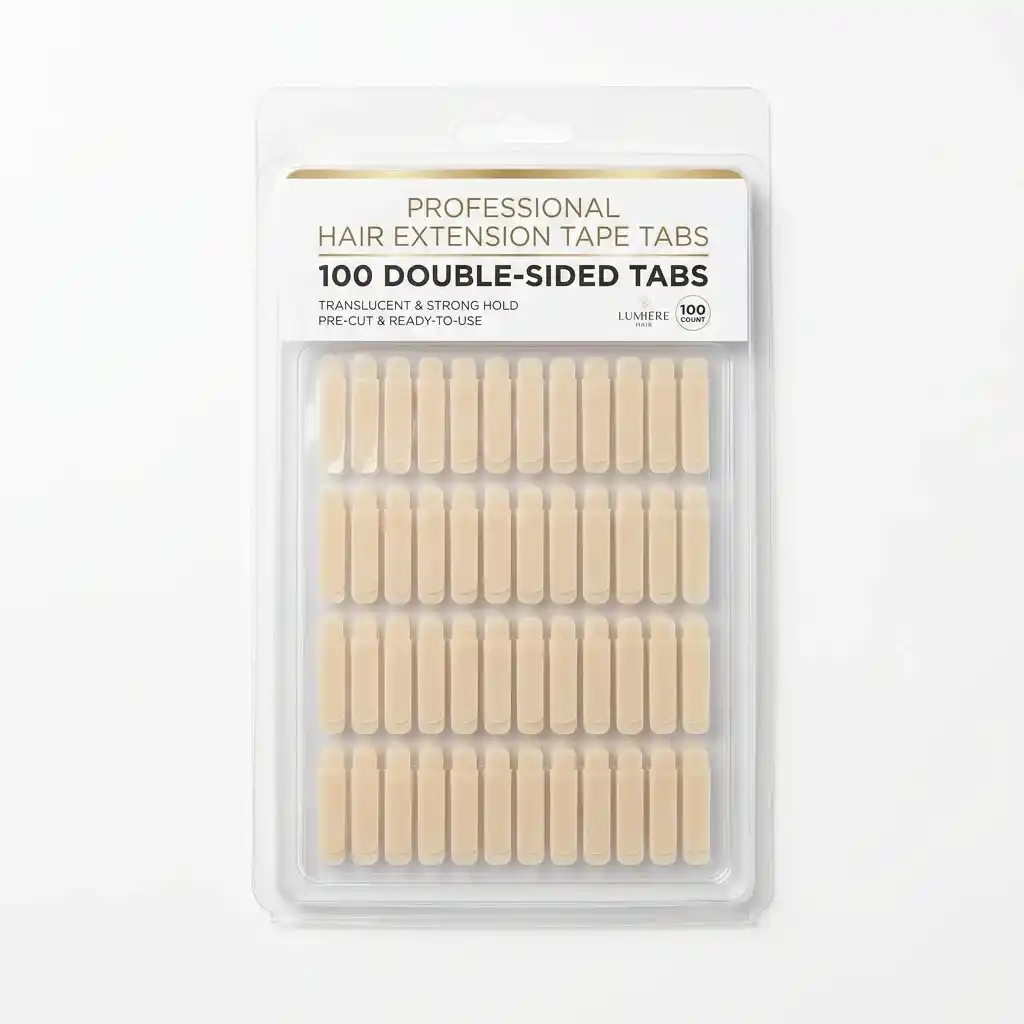
Walker Tape is a name that comes up in professional circles constantly. Their Ultra Hold formula is one of the strongest on the market — genuinely designed for clients with thick, coarse, or oily hair who struggle with standard tapes lifting too soon.
The roll format gives stylists the flexibility to cut tabs to the exact size they need, which is useful when working with wefts of varying widths. It’s a premium product at a slightly higher price point, but for salon use or anyone who’s struggled with bonds not lasting, it justifies the spend.
If your hair tends to be oily at the roots, Walker Tape Ultra Hold is one of the few adhesives specifically formulated to handle that — most standard tabs start to loosen when exposed to scalp oils over time.
Pros: Industry-trusted, exceptional hold, oil-resistant, great for thick hair
Cons: Roll format requires more effort than pre-cut tabs, higher price
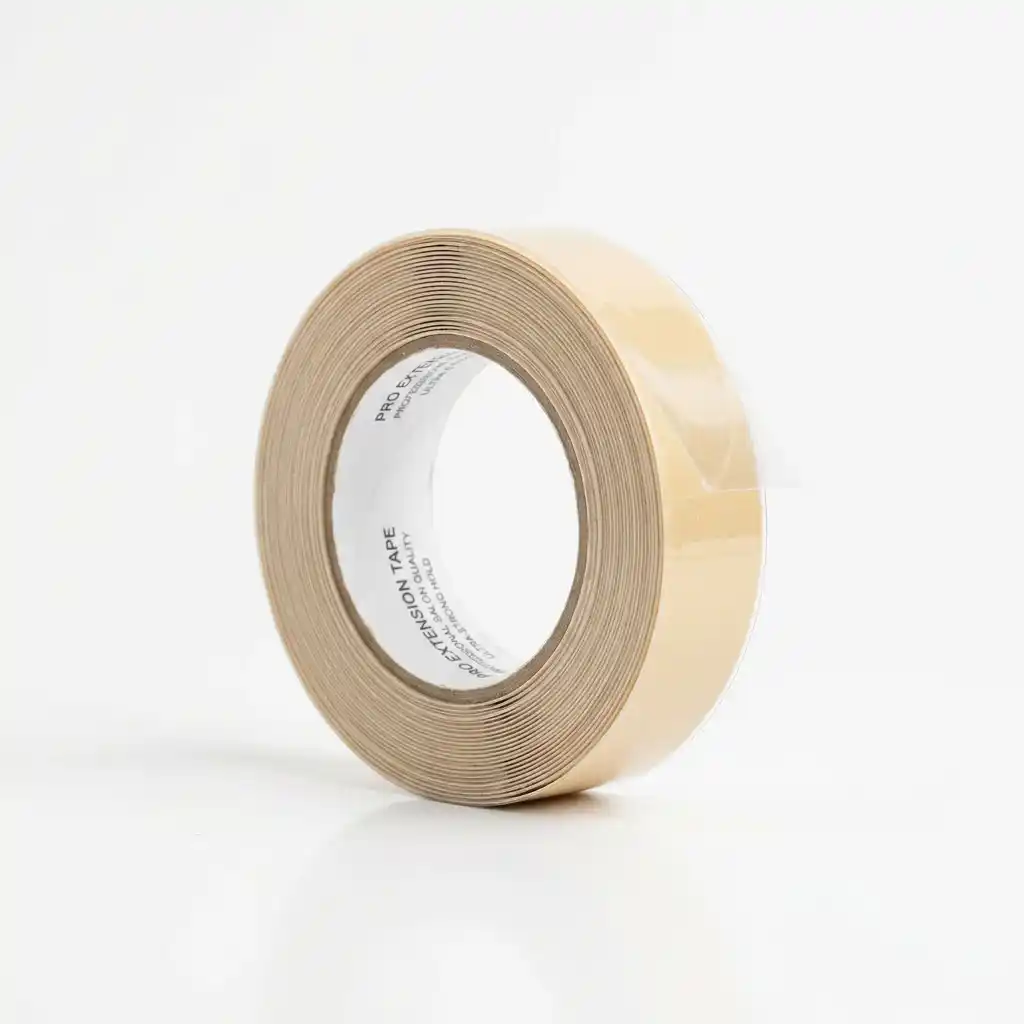
4. Glam Seamless Double Sided Tape for Hair Extensions (60 Tabs Pack)
Best for: Sensitive scalps, Glam Seamless extension users Hold time: 6–8 weeks
Glam Seamless makes their own replacement tabs specifically engineered for their extension wefts, and the compatibility shows. If you’re using Glam Seamless, Perfect Locks, or Zala extensions, these tabs bond better than generic alternatives because they’re made for that specific backing material.
Beyond brand compatibility, these tabs are also a solid choice for anyone with a sensitive scalp. The adhesive formula is gentler than ultra-hold options while still giving you a respectable 6 to 8 weeks of wear. The pack comes with 60 tabs, which is enough for a full head installation.
Pros: Excellent brand compatibility, sensitive-scalp friendly, strong hold
Cons: Works best with specific extension brands, smaller pack size
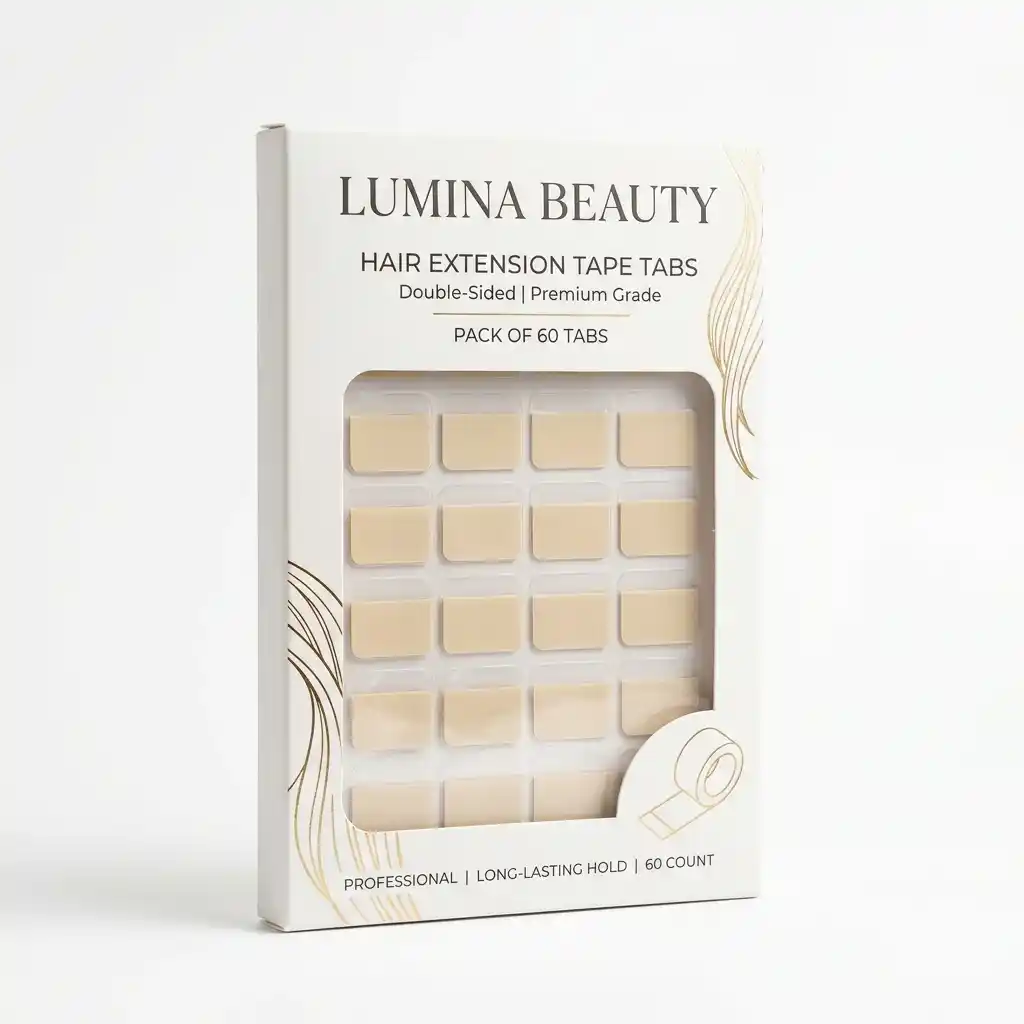
5. Full Shine Replacement Tape Hair Extensions (No-Residue Formula, 36pcs)
Best for: Full Shine extension users, residue-sensitive clients Hold time: 6+ weeks
Full Shine’s replacement tape is made specifically for their extension range, but it works well with other thin weft extensions too. The no-residue formula is particularly good — anyone who’s ever spent an hour trying to scrub sticky adhesive off wefts will appreciate just how much easier cleanup becomes.
The tabs measure 0.8cm x 4cm, which makes them suitable for narrower wefts. These are a cleaner, neater option if you care about maintaining your extension wefts in good condition between retaping sessions.
Pros: Clean removal, no residue, protects weft integrity for reuse
Cons: Smaller tabs may not suit all extension weft widths
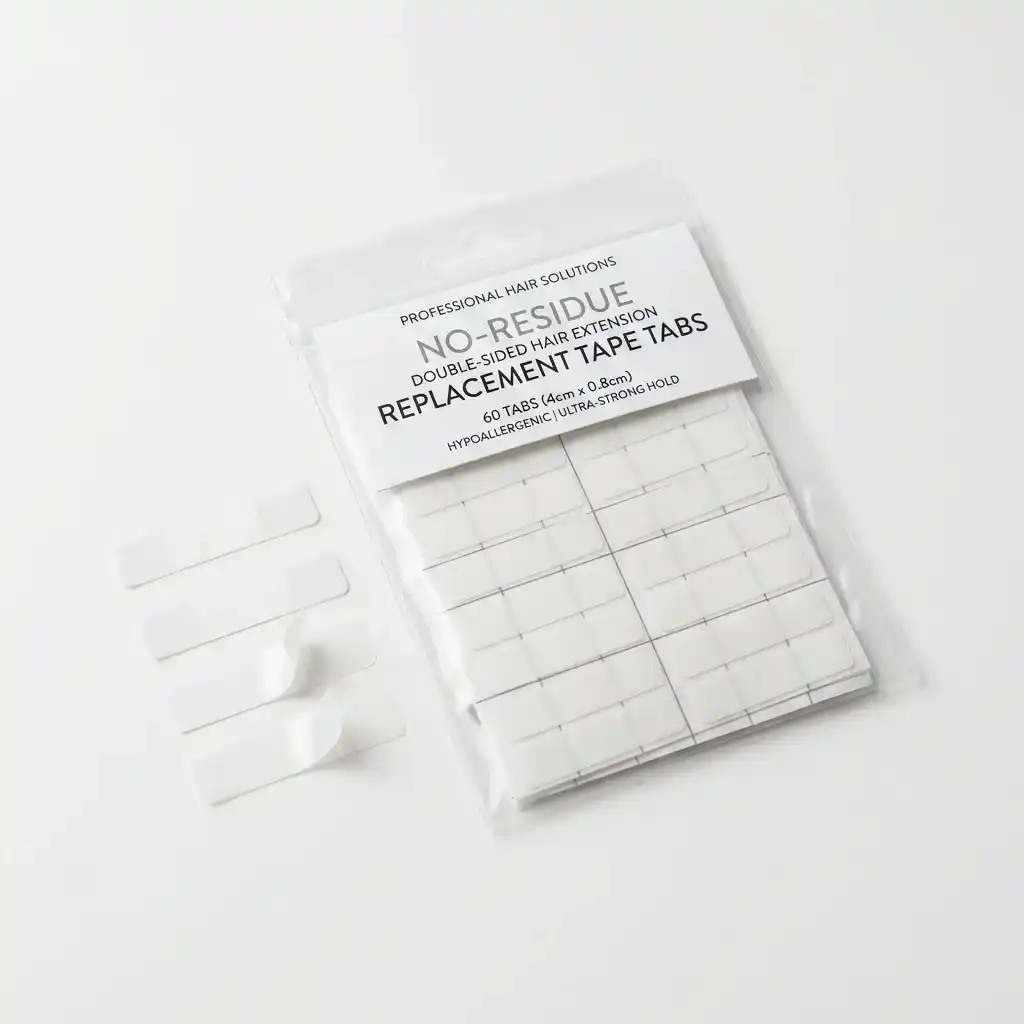
6. Blulu 360pcs Blue Hair Extension Tape Tabs Bulk Pack
Best for: Stylists, salon bulk buying, mixed hair types Hold time: 5–7 weeks
For anyone who does a lot of installations — whether you’re a professional stylist or just someone who retapes regularly and wants to buy in bulk — the Blulu 360-piece pack offers exceptional cost-per-tab value. The blue tabs are waterproof and strong, with a double-sided adhesive that holds through regular washing.
At this price per tab, you can afford to replace tape conservatively — swapping out at 5 weeks rather than stretching to 7 — which is actually better practice for your hair and scalp long term.
Pros: Incredible value, waterproof, large pack, good everyday hold
Cons: Not the strongest option for very thick or oily hair
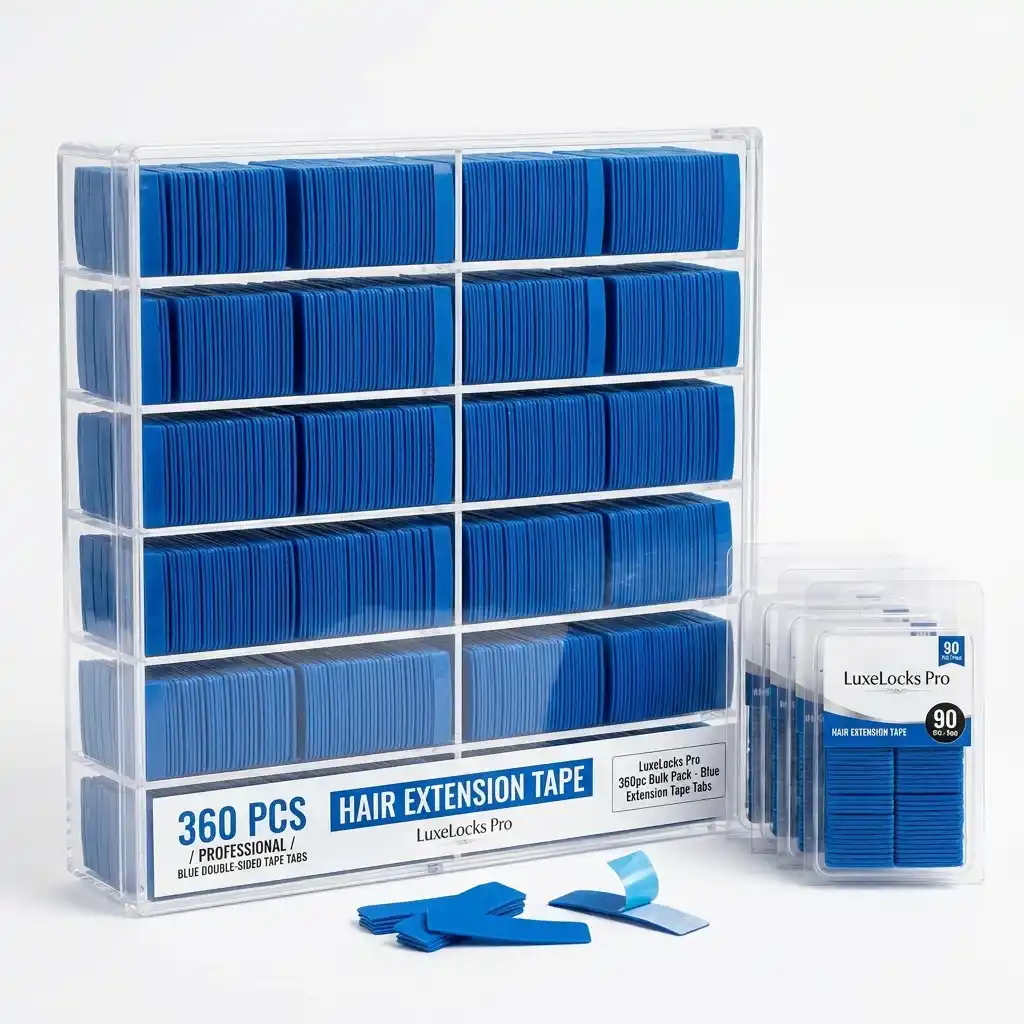
7. GOO GOO Tape In Extension Remover Tool Kit
Best for: Safe removal without damage
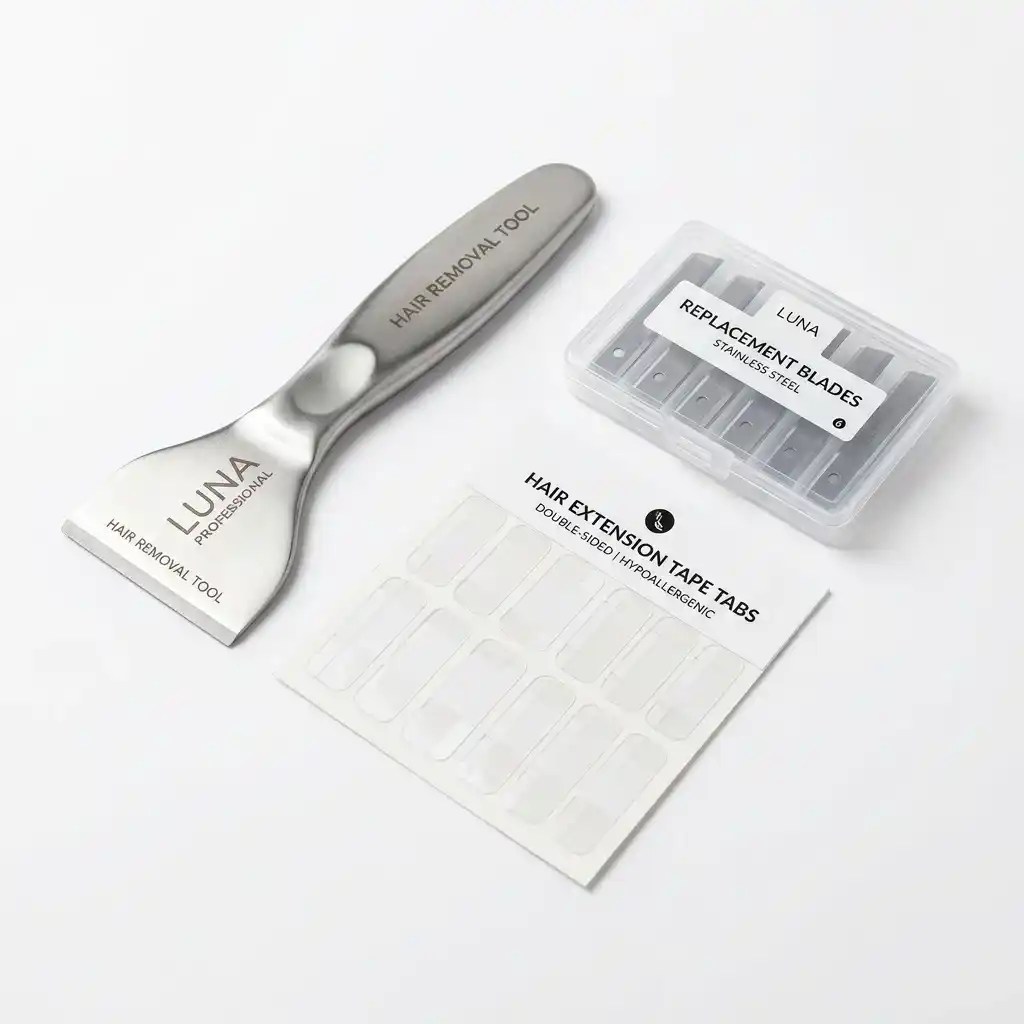
Not technically a tape, but worth mentioning here. Proper removal is just as important as proper application. This kit from GOO GOO includes a scraper tool with replacement blades and a set of tape tabs. If you’re doing your own retaping at home, having a proper removal tool prevents you from pulling or stretching the weft — which is how damage happens.
Pair this with the MIILYE Tape In Extension Remover Spray (4oz) or Big Kizzy Two-Step Remover System (8oz + 4oz) for a clean removal process every time.
Pros: Safer removal, includes replacement blades, great starter kit
Cons: Limited tabs included, remover solution sold separately
Brand Compatibility: Match Your Tape to Your Extensions
This is where a lot of people go wrong. Using mismatched tape and extensions can mean bonds that fail early — not because the tape is bad, but because the adhesive chemistry doesn’t suit that particular weft backing.
Here’s a quick compatibility guide:
| Extension Brand | Recommended Tape |
|---|---|
| GOO GOO | GOO GOO Replacement Tape Tabs |
| Full Shine | Full Shine No-Residue Replacement Tape |
| Glam Seamless / Zala | Glam Seamless Double Sided Tape Tabs |
| Donna Bella / Babe | Ultra-hold double-sided tabs |
| hairtalk / Hotheads | Original Brown™-style tabs or Walker Tape |
| BELLAMI | Pro Hold-style double-sided tabs |
| Most brands (general) | GOO GOO 72pcs or MIILYE 100pcs |
When in doubt, stick to the replacement tape sold by your extension brand. If that’s not available or it’s outside your budget, GOO GOO and MIILYE both work reliably as universal options across most extension types.
How to Apply Replacement Tape: Step by Step
Getting the tape right is a skill. Here’s the process that gives you the best hold and keeps your hair healthy:
Step 1: Remove the old tape carefully. Never pull extensions off dry. Apply an extension remover solution — the MIILYE Remover Spray or Big Kizzy Two-Step Remover both work well — and let it penetrate for 30 to 60 seconds before gently sliding the wefts apart.
Step 2: Clean the wefts completely. Once the old tape is off, any adhesive residue left on the weft will compromise your new bond. Use a residue remover (Step 2 of the Big Kizzy system is specifically designed for this) and wipe the weft backing clean. Let it dry fully.
Step 3: Prep your natural hair. Before reinstalling wash with a clarifying shampoo and let it dry thoroughly. No dry shampoo, conditioner or oils should be used near to the root area. Even a small amount of product residue at the root will cause early lifting.
Step 4: Apply the new tape tab. Peel the backing off one side of the tab and stick it firmly to the weft backing. Then peel the second side and sandwich your natural hair in between. Position the tab precisely — zero overhang past the edge of the weft.
Step 5: Apply firm, sustained pressure. For a minimum of 20 to 30 seconds hold each link between your fingers. The glue is fully activated by pressure. Some stylists use a flat iron on the lowest setting to warm the bond, which improves adhesion.
Step 6: Wait 48 hours before getting it wet. It takes time for the adhesive to completely cure. Your bonds will last much less time if you wash your hair within a few hours of installation.
How to Care for Tape-In Hair Extensions
This section matters just as much as your tape choice. You can use the best tape on the market and still have bonds fail within two weeks if your aftercare routine is working against you.
Use a sulfate free shampoo.
This is non negotiable. Sulfates are detergents that break down adhesive bonds over time. Swap your regular shampoo for a sulfate free formula as soon as your extensions go in and don’t go back until they come out.
Keep the conditioner away from your roots.
The conditioner is slippery by nature — that’s literally what it’s designed to do. Apply it only from the mid-lengths down, rinse thoroughly, and never let it sit near the tape bonds.
Avoid heavy oils and serums at the root.
Argan oil serums, root sprays, and heavy leave-in conditioners are great for your lengths but disastrous for your bonds. Apply everything from ear level down.
Detangle gently and work from the ends up.
Never yank a brush through extensions from the root. Use a loop brush or a wide tooth comb. Start at the ends and work your way up slowly. This protects both your natural hair and the weft backing.
Sleep with your hair contained.
Before going to bed a low ponytail or loose braid keeps the hair from tangling during the night and lessens friction on the bonds. Silk or satin pillowcases are a genuinely useful investment here too – they reduce friction across the board.
Retape on schedule.
The sweet spot is every 6 to 8 weeks. Stretch beyond 8 weeks and the bonds start to break down, the wefts shift position and the tension on your natural hair increases. Staying on schedule is one of the best things you can do for your hair health.
Don’t skip maintenance appointments if you have a stylist.
Move up appointments aren’t just about retaping — a good stylist will also check the condition of your natural hair and catch any tension issues before they become a problem.
Frequently Asked Questions
Are Tape In Extensions Bad for Your Hair?
This is probably the most common question people have before they commit to tape-ins and it’s a fair one. The honest answer is: no, they are not bad for your hair — but only when they’re applied, maintained, and removed correctly.
Tape-in extensions don’t require heat, chemicals or braiding. They sit flat against the scalp, distribute weight across a wide surface area, and when done with the right tape and the right technique, they should leave your natural hair completely undamaged.
The problems people experience — breakage, thinning, scalp irritation — usually come down to a handful of avoidable mistakes: using tape that’s too strong for fine hair, leaving extensions in too long, DIY removal that pulls instead of slides, or improper sectioning that concentrates too much weight on a small amount of natural hair.
In terms of damage risk compared to other extension methods, tape-ins consistently come out towards the lower end.
FAQ About Cost
How Much Does It Cost for Tape-In Hair Extensions?
The cost breaks down across a few different components and it helps to think about them separately:
Cost Component and Typical US Price Range
(1): Hair extensions (pack of 20 wefts)
$30 – $300+ depending on quality, length, and brand
(2): Professional salon installation
$100 – $600 (varies by region and stylist)
(3): Replacement tape tabs (retape pack)
$8 – $30 per pack
(4): Move-up/maintenance appointment
$80 – $200 every 6–8 weeks
If you’re doing your own retaping at home — which many people do successfully — you can cut the ongoing maintenance cost significantly. A pack of GOO GOO or MIILYE replacement tabs costs around $10 to $15 on Amazon and gives you enough tabs for a full head retape.
FAQ About Care
How Do You Care for Tape-In Hair Extensions?
The full care routine is covered in the section above – but the short version comes down to five habits:
Use sulfate free shampoo only. Keep conditioner and oils away from the tape bonds. Detangle gently starting from the ends – sleep with your hair in a protective style. Retape every 6 to 8 weeks without stretching it further.
Treat the extensions the way you’d treat expensive, high quality hair — because that’s exactly what they are. The better you care for them. The more times you’ll be able to reuse the wefts and the lower your cost per wear becomes over time.
FAQ About Thin Hairs
Are Tape-In Extensions Good for Thin Hair?
Yes — and they’re actually one of the better extension methods for people with thin or fine hair, as long as you approach it correctly.
The key is using single-sided tape tabs instead of double-sided. A standard sandwich installation puts a weft on both sides of your natural hair, which is great for thick hair but can feel heavy and create too much tension on finer strands. With single-sided tabs, you’re using just one weft per section, which cuts the weight considerably.
The other thing that matters with thin hair is sectioning. Never apply more weight to a section than your natural hair can comfortably support. A good stylist will take smaller, thinner sections and use lighter wefts to make sure nothing is pulling.
Product-wise, extensions like the GOO GOO Tape-In Hair Extensions Human Hair (20pcs) offer a lightweight, seamless weft design that sits flat and integrates well with fine hair. Pair those with the GOO GOO single-compatible tape tabs and you’re in good shape.
Thin hair does benefit from going to a professional for the first installation, at least. Once you understand how your hair handles the weight, retaping at home becomes much more straightforward.
FAQ About Extension
How Long Does Tape-In Extension Tape Last?
With a quality tape and proper preparation and aftercare, you should comfortably get 6 to 8 weeks of hold. Extra-hold formulas like the Walker Tape Ultra Hold can push toward 8 weeks even with active lifestyles.
Budget tapes — or any tape applied over oily, damp, or product-coated hair — will start lifting in 2 to 3 weeks, sometimes sooner. The prep work before application matters just as much as the tape itself.
Can I Reuse Tape Tabs After Removal?
No. Once a tape tab has been removed, the adhesive bond is compromised. Reusing old tabs risks incomplete adhesion, early lifting, and potential hygiene issues. Replacement tabs are inexpensive enough that there’s no real reason to risk it — a pack of 100 tabs from MIILYE costs around $12 on Amazon.
What Tape Works Best for Oily Scalps?
Oily scalps are one of the more challenging scenarios for tape in extensions – because the scalp oils gradually migrate up to the bond and weaken the adhesive over time.
Your best options are high-tack, oil-resistant formulas — Walker Tape Ultra Hold being the most consistently recommended by stylists for this issue. Prepping the root area with a clarifying shampoo (not just a regular wash) before applying – It also makes a significant difference.
Can I Use Regular Double Sided Tape for Hair Extensions?
No. This is a mistake that seems logical but causes real problems. Office or craft double sided tape isn’t medical grade, isn’t formulated for skin contact, doesn’t bond the way extension-specific adhesive does and will almost certainly cause irritation or an allergic reaction. It’ll also fail within days. Save yourself the trouble and use tape made for the job.
Final Thoughts: Which Tape Is Right for You?
If you want one recommendation for most people – It’s the GOO GOO Hair Extension Tape Double Sided Adhesive Replacement Tape (72pcs). It’s reliable, well priced, works with most extension brands, and has thousands of real reviews backing it up. For thin or fine hair, add the single-sided compatible version. For oily or thick hair, step up to Walker Tape Ultra Hold.
If you’re buying in bulk or retapping frequently, the MIILYE 100 Tab Pack offers the best cost-per-tab on Amazon without compromising on hold quality.
The bottom line is this: tape-in extensions can be a long-term, low-damage, genuinely life-changing addition to your hair routine. But only if the foundation — the tape — is right. Get that part sorted first, and everything else falls into place.
Disclosure:
This article contains affiliate links. If you purchase through these links – we may earn a small commission at no extra cost to you. All product recommendations are based on research and real world performance — not paid placements.